Saturday, March 10, 2012

Marmot Zion (Neoshell) Jacket Review

My friend, main climbing partner, and fellow gear addict Phil graciously agreed to write a review on his Marmot Zion Jacket.  I have eyed this jacket all winter with envy and was anxious to get an in-depth summary of his thoughts.  Here they are:


Marmot Zion Jacket
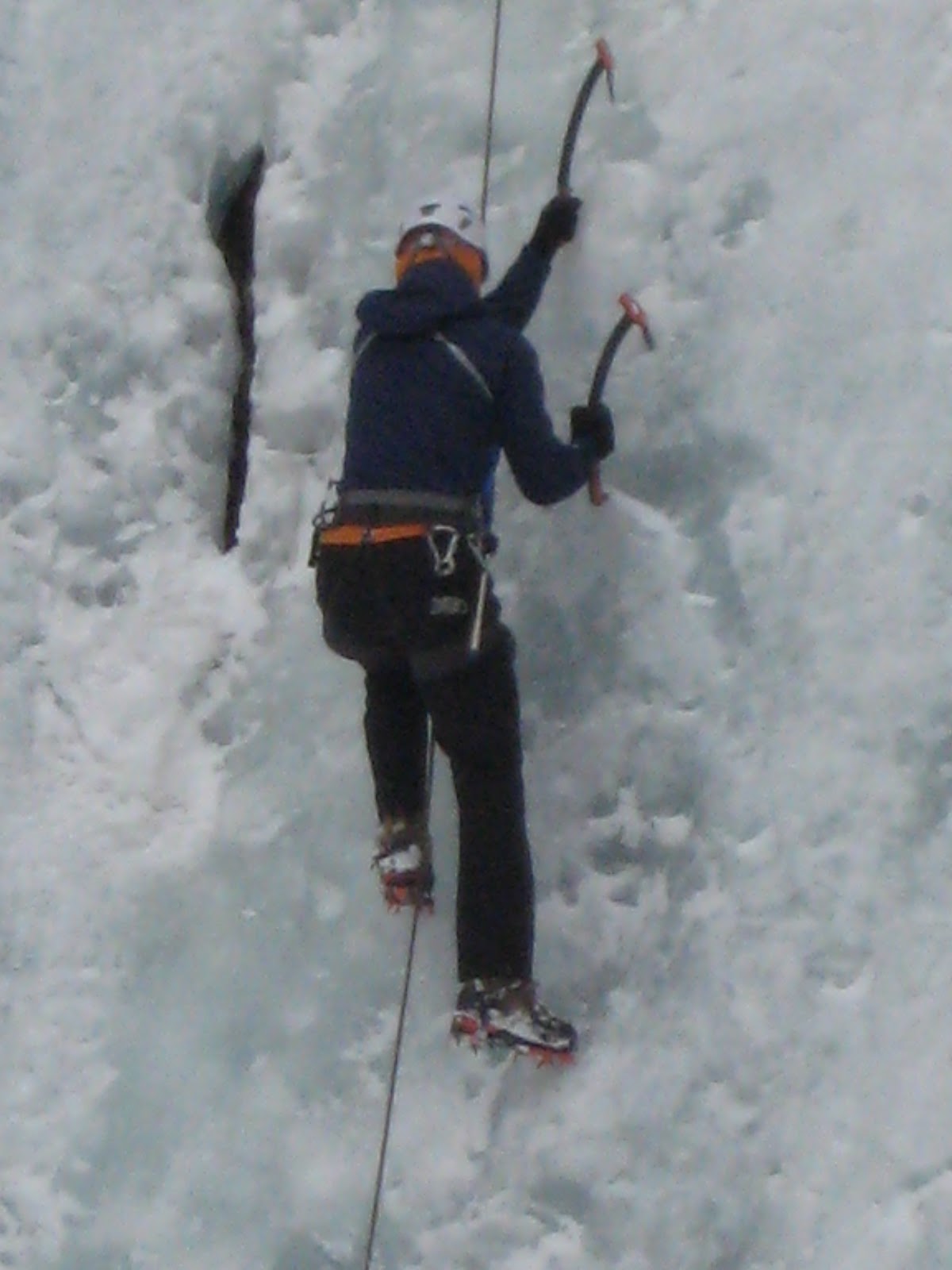
Phil ice climbing in his Marmot Zion Jacket


Size Large

Catalog weight:  18oz (probably a medium, maybe a small)

Scale weight: 28oz (large); Really, Marmot? Really?  10oz difference?  I guess maybe if they measured a small.


W.L. Gore and Associates patented their first WPB fabric circa 1976 and revolutionized the outdoor clothing industry. Many companies since then have worked to improve the waterproof-breathable category with some nominal improvements (mostly in the total weight of the membrane/treatment and the face fabric that they match it to), but you and I both know that waterproof AND breathable usually aren’t on speaking terms when you’re out huffing it up some canyon. Sure some fabrics will lose that clammy feeling within a few minutes or they may have some pit zips that alleviate the symptoms but unless temps are really low and/or you are not sweating, feeling clammy comes with adding a shell.

Well. . . that’s not exactly the case anymore. Polartec’s new Neoshell membrane has come a long way from our old and beloved Gore-tex partners.
Hiking uphill, 20 degree weather, comfortable in t-shirt and Zion Jacket


For disclosure purposes, I sweat. I sweat a lot! When hiking up to our usual ice cragging area with temps in the 20’s and only wearing a t-shirt, I drip sweat from my brow, my back, my legs, and usually have some beading up on my forearms. I know that is gross. I understand; my wife tells me about it occasionally. However, you need to know that in order to understand how great Neoshell is. This past winter I have used Marmot’s Zion Jacket (featuring neoshell) almost exclusively (I have dabbled in dry-Q elite). With the Zion Jacket I make that same approach wearing my usual silkweight long-sleeve tee, plus the Zion! The results? I still sweat a ton…. But now it gets moved outside the jacket like I’ve been promised it would by so many other fabrics for so long! I dump my pack to get racked up and I’m already dry. Literally.

But enough about the fabric (which is awesome), the jacket as a whole deserves some consideration.
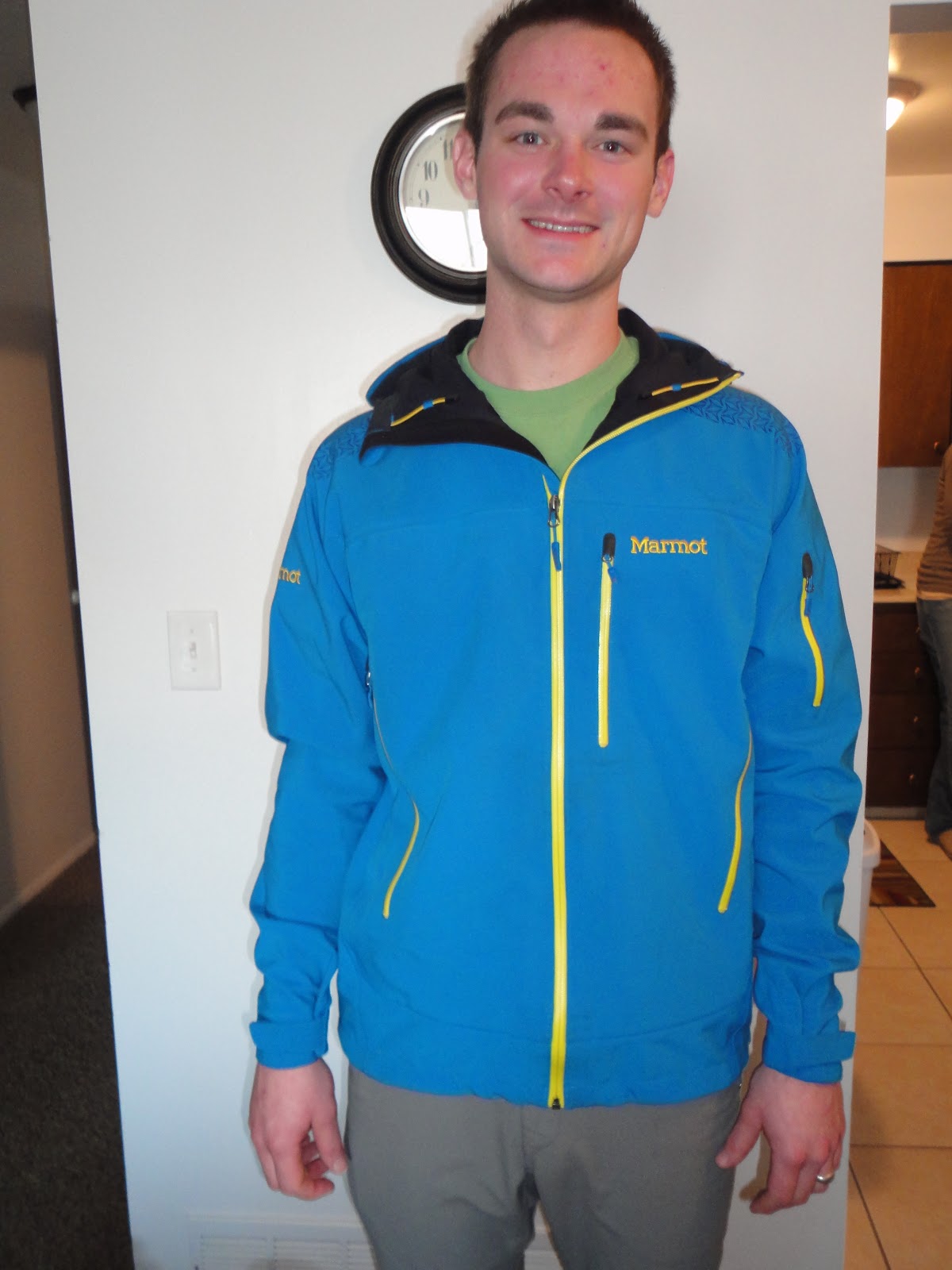
6'3", 185lbs, Zion Jacket in size Large


Hood is a little tight across the mouth/lips with helmet on


I am 6’3” 185lbs. and I have the Zion in a large. The medium fit well, ridiculously well in fact, but had one drawback: on the official harness/jacket untuck meter it was a 9 (totally un-tucked from the harness within 2 ice moves and moving over my gearloops). So I compromised by going with the large that bellows out a little above a harness or hipbelt because of the additional volume (not too much of a compromise in my opinion). Dave Searle's un-tuck meter: http://coldthistle.blogspot.com/2011/12/my-2-pence-on-midlayers-by-dave-searle.html

Marmot paired the neoshell membrane with a super comfy liner fabric (think brushed suede or butter-jersey) and a burly shell fabric that will probably hurt the rock more than the rock will hurt it. It is a soft-shell format that most other companies aren’t doing with neoshell. At first I was a little disappointed with the heavy-handed construction, but have found solace in a few key facts:

First and foremost, the Zion has impressive insulative properties. Good enough in fact to help eliminate a mid layer piece in your layering system. This helps compensate for the heavier nature of this shell without sacrificing too much versatility (more layers can usually handle a broader temperature range) because of how breathable it is – it acts like your midlayer, with the benefit of being stormproof. For example, a normal layering system could be MHW’s wicked lite long tee (5.6oz), Patagucci’s R1 Hoody (12.8oz), and Arcteryx’s Alpha Lt (super sick and 12.9oz); total weight 31.3oz. A layering system with the Zion that will easily handle upper teens and low 20’s while climbing is as follows: MHW’s wicked lite long tee (5.6oz), and the Zion (28oz). That’s it. Simple, and with a total weight of 33.6oz. I figure for 2oz more I have a broader range of comfort without having to stop and remove or add layers. That's pretty sweet. The best part is, when the jacket is on, I really don't notice the extra weight; and this jacket rarely comes off.  If you are venturing into colder climes take the R1 and the Zion (40.8oz for an action suit that will take you to around 0˚ F).

Second, the face fabric has and will continue to stand up to my abuse. I have scuffed this jacket against Ogden quartzite and SLC granite without any sign of wear.

Lastly, the combination of fabrics is exceptionally stormproof and doesn’t make that awful hardshell noise. ‘Nuf said.

The Zion includes 5 pockets: 2 handwarmer pockets, 1 napoleon pocket, 1 sleeve pocket, and 1 internal pocket. All are fleece lined and very comfortable. The two handwarmers are spacious enough for keeping your lead gloves warm and dry and to stash your skins in, while the napoleon is big enough to hold a 12oz drink along with your lip balm and has a headphone portal. I have found that the sleeve pocket works great to hold GU packets or chomps and the internal pocket never gets used. The Velcro adjustment at the cuff works very well for the wrap-around tab configuration they used.  The hood is helmet compatible, and has two adjustments: the usual hood aperture pulls and a rear circumference pull cord help you batten down the hatches and take out volume.
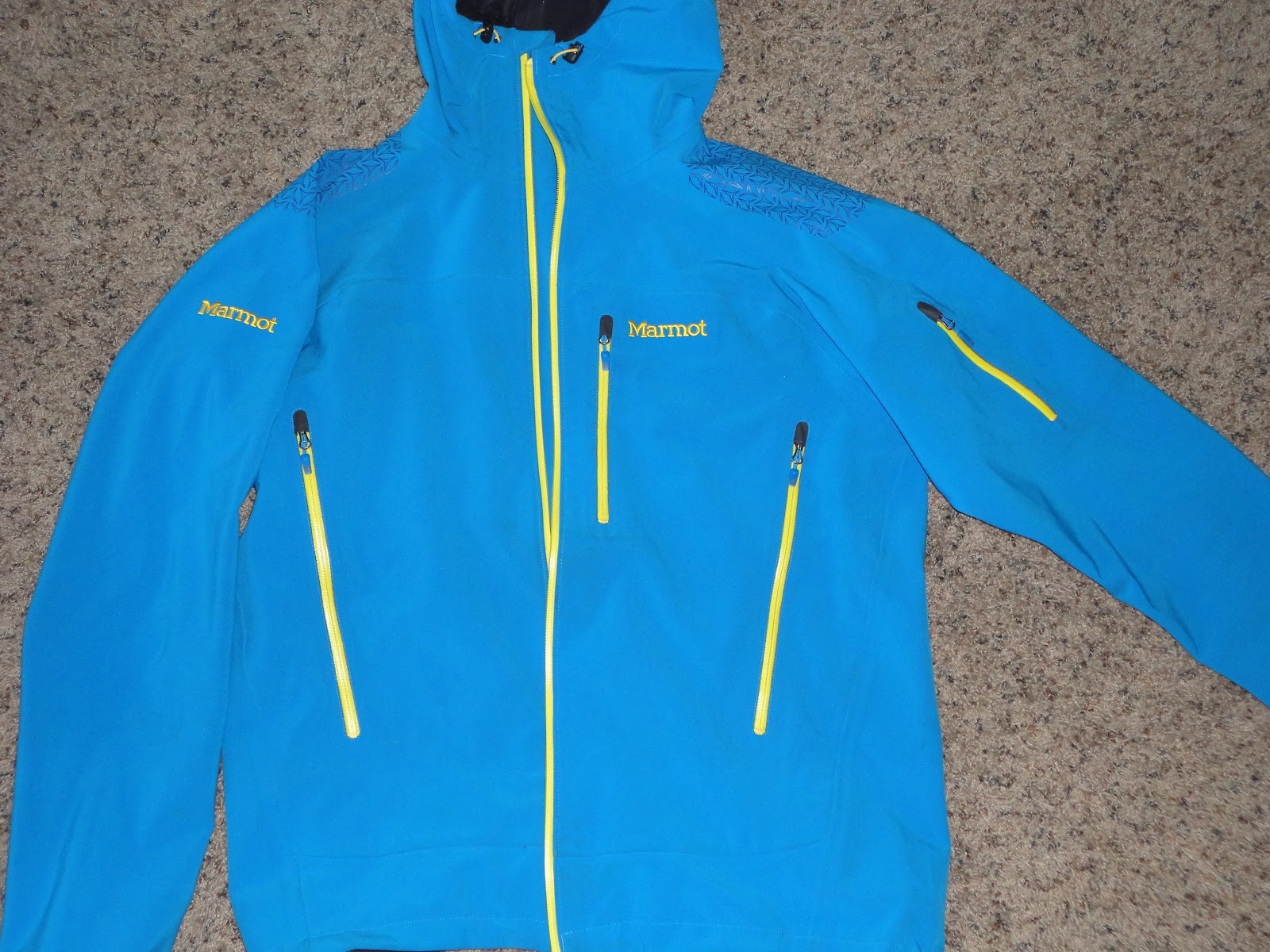
Harness/Hipbelt-compatible pockets with water-resistant zips

One internal zip pocket and soft brushed lining


Now for everyone’s favorite part…the nitpicking!

The two handwarmer pockets that are purported to be hipbelt compatible have a problem I find happens a lot among climbing jackets. The upper portion of the pocket is visible and usable above a harness; still, the lower offending portion is cut off – effectively making the pocket opening smaller. Such is the case with the Zion’s pockets. Though to be fair, the zipper pull is at the top in the closed position so the pockets really are usable with a harness on.

 In my opinion, and for my head, the hood is a little low on volume. With the hood up over a helmet and fully zipped, my chin and lips abut the zipper area forcefully enough for me to usually keep the zipper slightly undone. If it were a perfect hood, it would fit over my helmet, fully zipped, with some room inside to make adjustments or at least offer some more stretch in the fabric.

The last thing is the fit. Like I said, the medium offered a much more trim fit which I usually look for, but the angel-wing technology failed a bit and it would come untucked. The large has extra volume in strange areas that l notice when I’m at home critiquing the jacket, but actually really don't notice when I’m out using it. However, the angel-wing mumbo-jumbo still fails compared to my standard - the Arcteryx Alpha. The Alpha's hem moves about 3" from arms down to arms up. In contrast the Zion moves at least 5". When pinned under a harness the stretch of the fabric helps in this area. In Marmot's defense (I really like their products), many of their other jackets that I own don't move nearly as much as the Zion.


At least 5" of lift in the hem when arms are raised.  I guess they forgot the angel-wing on this one.


All in all this is a very nice jacket. As with all pieces of gear, it could be improved upon. Anyone can take their favorite piece of kit and say, "if this small problem was fixed, this would be perfect." This jacket falls under that category. Yet, even the way it is made right now, it does what I want all gear to do: go unnoticed. I don’t ever have to think, “I’m starting to overheat I’d better fiddle with my pit zips/take off a layer,” or “this is way more wet than I expected, I wish I had brought my hardshell.” And that is well worth its few short comings.

Overall I would give the jacket 4 stars out of 5.  I love everything about this jacket except the minor hood issue and that I had to get a large to keep it tucked into my harness.  It easily establishes itself among the best winter ice and alpine climbing jackets available.

Friday, March 9, 2012

RandoSteve from TetonAT killed in Avalanche

Just a couple days ago, Steve Romeo and Chris Onufer were buried in an avalanche on Ranger Peak in the Teton Mountains.  Steve, aka Randosteve, was the creator of TetonAT.  I have been following this blog almost daily for quite a while now, and just through reading his daily posts I almost feel as if he has become a friend, or at the very least an acquaintance.  In any case, I feel extremely saddened at Steve and Chris' deaths, especially for those loved ones left behind.  Steve and Chris have moved on to bigger mountains and deeper powder, the kind that never gets skied out, but my prayers will be with the family and friends that are left behind.  Thanks, Steve and Chris, for the knowledge and passion that you shared with us while you were still here!

For more information on this tragedy, visit:

www.tetonat.com

and

https://www.facebook.com/FriendsOfSteveRomeoChrisOnufer

and

http://www.getstrongergolonger.com/journal/2012/3/8/steve-romeo-6171-3712.html

Thursday, March 8, 2012

Sleeping Bag vs. Quilt

I asked my mother-in-law if I could borrow her sewing machine for a couple days because I don't have one of my own.  She asked me what I needed it for, so I told her, "I'm making a quilt."  Some other family members happened to hear the conversation and said, "Is Kelsey making it or are you?"  "No, I'm making it.  She's working," I answered, a little uneasy about where this conversation was headed.  So now I'm the joke in the family because I stay home and sew quilts while Kelsey is working hard to support our family.  They've mostly forgotten about it now, but I'm sure this blog post will remind them.

Anyway, I was sewing a quilt for backpacking and climbing.  I made this quilt about 8 months ago after my 45 degree down sleeping bag blew away along with my tent in the Cirque of the Towers, Wind Rivers.  That was an expensive trip.


The Philosophy


The philosophy behind a sleeping quilt instead of a sleeping bag is pretty simple.  A sleeping bag provides warmth to your body by trapping air that is then heated by your body.  The loft in the sleeping bag insulation is what traps the 'dead' air.  The more loft, the warmer the bag, generally.

So, when you are laying in a sleeping bag, your body compresses the insulation and it is not able to trap air that your body can warm.  That's why it's so important to sleep on a pad.  Well, if the pad is giving the insulation but the compressed insulation from the bag is not doing much, that is just extra weight for nothing.  So, somebody decided to cut the bottom out of a sleeping bag, forget the zipper, and voila, the sleeping quilt was born.

Other companies have used this philosophy to make quilts and lightweight sleeping bags.  Some of these companies include Nunatak (www.nunatakusa.com), Jacks 'R' Better (www.jacksrbetter.com), and Golite (www.golite.com).  Using this same philosophy, Big Agnes makes their sleeping bags with a pad sleeve on the bottom of the bag instead of insulation.  Their bags are still fully enclosed with a zipper.


Our Homemade Quilts

Phil made a quilt quite a few years ago to replace an old sleeping bag.  I made my quilt about 8 months ago to replace my lost sleeping bag.  Phil's quilt is down and baffled, my quilt is primaloft and quilted.
My Quilt.  It's made with two layers of 60g primaloft over the torso, and a single layer over the legs.  I stay comfortable to about 40 degrees, but I'm a pretty warm sleeper.  With insulated pants (MHW Compressors), booties (Homemade Primaloft), and a belay jacket (Rab Neutrino), I can stay comfortable to about 15 degrees.  0 degrees is pushing it with this and my other layers, but it'll do it.  This also adds about 20 degrees while added to another sleeping bag.  This quilt weighs 16oz without the strings.  I added the strings to help it stay on top of the pad and keep out drafts.  It cost about $120 for materials.


Phil's Quilt.  He has been using this for all four seasons for quite a few years now (5+).  He used a 30 denier (approx) water-resistant rip-stop nylon for the shell and about 850 fill-power down.  The down he bought was 900 fp down, but that is a best-possible-condition measurement.  In the real world it is closer to about 850 fp.  This quilt will keep him warm to about 30 degrees without his other layers, and to about 0 degrees with compressor pants and Rab Neutrino.  This quilt weighs 21oz, according to my scale.


There are sleeping bags on the market that have similar temperature ratings for similar weights, but they are usually much more expensive than what we were able to make our quilts for.  Or, there are sleeping bags for similar prices and similar temp ratings, but heavier.

For example, the warmth and weight of Phil's quilt would be comparable to the Western Mountaineering Megalite.  Phil made his quilt for about $180, the Megalite retails for $390 in a regular.

The warmth and price of my quilt would be fairly comparable to Golite's RS1+ quilt.  I guess my quilt cost about $40 more.  My quilt weighs about 9oz less than the Golite however.  I'd pay $40 for a better insulation and 9oz less total weight.

Conclusion

Quilts are a good way to lose weight without losing warmth.  The companies that make high-end quilts are quite pricy, but then again so are high-end sleeping bags.  Quilts are relatively easy to make, especially because no zippers are involved.

Here are a couple good links for instructions on how to make a quilt:

http://thegpsgeek.com/blog/archives/6

And also:


It is important to note that quilts can be quite drafty in cold weather if you don't design a way to keep the quilt tight against the pad.  This isn't as noticeable at 45 degrees, but is very noticeable at 10 degrees. 

I usually like sleeping in quilts better than sleeping bags because I tend to get a little claustrophobic when my sleeping bag is zipped all the way up. 

With all that said, I still love Western Mountaineering and Feathered Friends bags and hope to own one or two of each some day.  I own a couple Marmot bags that I really like and wouldn't get rid of, even though I use my quilt more and more.


Tuesday, March 6, 2012

Intro to Mountaineering Course, March 21, 22, & 24


Just a heads up for anybody that will be in the Ogden area March 21, 22, and 24.  I will be teaching an Intro to Mountaineering Course through the Weber State Outdoor Program.  The cost of the course will be $45 for Weber State students and $50 for the general public.  This is the fourth or fifth consecutive year that this course has been taught, the third that I have been involved with the teaching.

This is an INTRO course, so the curiculum will be fairly basic.  It is  helpful to have a background in hiking/backpacking/climbing, but not necessary.  We will be discussing and practicing proper apparel/layering and equipment, avalanche safety, rope work and knot tying, crampon technique and self-arresting, and crevasse rescue.

For more information and to sign up, click

http://www.weber.edu/outdoor/IntroToMountaineeringCourse2012.html

or call the Weber State Outdoor Program at 801-626-6373.

Monday, March 5, 2012

Lightweight Midlayers: My Favorites

I love gear that impresses me the first time I try it on or use it, and then continues to impress me for the life of the product.  The following jackets are that type of piece:

Marmot Driclime Windshirt-  This jacket has been my most-worn piece of clothing over the last 9 years that I have owned one.  It used to accompany me on almost any trip, summer or winter.  Now, it usually goes with me on late spring, summer, and early fall trips, but I have phased it out of my winter system.  The only complaint I have had about this jacket is that it didn't come in a hooded version.  Marmot fixed that with the Ether Driclime Jacket ($110).  Can't wait to get my hands on one of those!

This is my original Driclime Windshirt.  It's 9 years old and I still wear it often.  It has one napoleon chest pocket.  This one is still my favorite.  Size Medium.

This is my newer Driclime, now about 2 years old.  This is a size large.  Same length as the medium though baggier in the torse and longer in the sleeves.  Not sure if they changed the liner fabric or not, but the liner in my old one is a bit softer than the new one.  I thought that may due to more use, but the newer one has been used a ton in the last couple years and the liner feels the same as when it was new.  I still love this jacket!

This is the Ether Driclime Jacket.  Same jacket essentially as the windshirt, just with a hood and handwarmer pockets.  My life is now a bit closer to complete. 

Struggling to get into the Cirque of the Towers before the mosquitoes do.  Windshirt kept me warm when the wind blew and I didn't overheat when the temperature rose.


NWAlpine Black Spider Light Hoody($90):  Though I haven't had it as long as many other jackets, it has quickly become one of my very favorites.  Initially I thought that NWAlpine had simply copied the R1 Hoody from Patagonia and then were selling it at a cheaper price.  However, as soon as I got my hands on one, I realized that it is a lighter, thinner material and the opening of the hood is a little bigger.  I love the R1, as do most people, but I think this is a more versatile piece.  When Phil and I went climbing a couple days ago, I wore my NWA, he wore his R1.  I was comfortable the whole time, he overheated a little bit.  I'm not saying the NWA Hoody is better than the R1, but the lighter fabric means that it is more versatile in slightly warmer temperatures.  The larger opening in the hood means that the hood fits under your chin instead of over it, like the R1.  I find this works a little better with a helmet strap because you can still zip it up or down without unbuckling the helmet.  The R1 hood is warmer though.

Other features that I love are the thumb-hole cuffs and a deep zipper for venting that also zips up to the side of the chin for comfort.   

There are only two complaints I have with this jacket, and they are very minor.  I wish the hood came down a little lower on the forehead, and I wish the cuffs were a little tighter and thumb holes a little bigger.  Other than that, the jacket is great.  Well worth $90.


Long in the torse and sleeves.  One zip chest pocket.  Hood fits under chin which allows for easy zipping up or down with a helmet on.

Deep zip is very efficient at dumping heat.

Cuffs could be tighter, thumbhole is kinda small
Even though I wear this hoody on almost every outing, this is one of the few pictures I have of it in action.  It is usually layered under another jacket.


There is a new jacket on the market that I predict will be fairly popular among the fast and light crowd.  This jacket is the OR Centrifuge Jacket.  Though I haven't yet had the chance to use it much myself, my brother-in-law has and loves it.  I think it will offer much of the benefits of the NWA Hoody, with some of the wind-resistance of the Driclime Windshirt.

The light blue color in this picture is a non-insulated wind-resistant fabric that is not stretchy.  The dark blue under the arms, on the back and the chin are a light, grid-fleece fabric.  This grid fleece about half the thickness of an R1 and about the same thickness as the NWA Hoody.  Two handwarmer pockets and one chest pocket and thumbloops round out the features. 


Tyson here is about 6' tall and weighs about 160lbs.  The medium fits him quite nicely.  I am 6'2" and 185lbs and it was too small on me.  I would need a large.


Anyway, there are a lot of great offerings out there.  I doubt you can go wrong with any of these jackets.  Heck, if you have the money, you'd probably be happy owning all three.


The Verdict


5 out of 5 stars on the Marmot Driclime Windshirt and the NWA Black Spider Light Hoody.  The fact that the post is titled "My Favorites" should have given that one away.  But the reason why I decided to write a post about these two jackets in particular is because these jackets continue to impress me, even after years of use.  Either of these jackets are well worth the money, in my opinion.


Buyer's Remorse/Lightweight Midlayer Intro

There are plenty of times that I have had buyer's remorse.  For example, there was this one time my wife and I got Indian take-out.  I love spicy food, but this time I asked them to make it super spicy.  It was SO good; so good, in fact, that I couldn't stop eating.  I ate so much that I had a stomach ache and spent the whole night laying on the couch, barely able to move.  Then, I spent the whole next morning in the bathroom dealing with the second half of the double-dragon effect (burns going in and coming out).  What I would've done to get the last 12 hours of my life and my money back.

Then there was this time that I signed up for the High Uinta Classic, an 80-mile bike race that goes through and over the Uinta Mountains of Utah.  Everything was going great until we got a surprise snowstorm at 10,000 ft.  20 minutes later I found myself in the back of an ambulance, cuddling with eight other hypothermic guys wearing spandex.  Yeah, I wanted my money back on that one too.

And then there was this time when I decided to check steepandcheap, saw an ice climbing backpack (or that watch or the jacket) that I knew I didn't need nor really want, but bought it anyway because the price was SO good that I couldn't pass it up (we've all been there).  I got my money back on that one, luckily, but it took three month of advertising online until I found a taker.  I lost out on $7 shipping to the buyer.

I have learned that there are times when you just have to accept that $60 bought you 45 minutes of cuddling with eight other guys, suppress it from your memory, and move on.  But I have also learned that I can usually avoid buyers remorse with outdoor gear when I do these three things:

First, do lots of research.  It drives my wife crazy at times, but if I'm in the market for a new piece of gear, I do a lot of research.  I'll make a list on excel with as many different products from all different brands in that category of gear and compare their weights, materials, prices, construction techniques, etc.  I even compare where seams are and how many seams there are, when it comes to clothing.

Second, I read as many reviews on the product as I can find.  On many occasions, I have found that other people will like or dislike a product for reasons I hadn't previously considered.

Third, I try the piece on in a store to see how it fits and what the jacket really looks like.  If I can't find a place that has it, I will find a good deal online from a place that will allow me to ship it back if it's not quite what I was looking for.

Finally, I shop around.  I love getting a deal.  There are few things better than getting exactly what you want for a good price.

Some things that have caused me to feel buyer's remorse:

At times I have decided to skimp on what I REALLY wanted for a lesser product to save money.  This has caused buyer's remorse.  I usually eventually end up getting what I really wanted in the first place and have to try sell the old, cheaper product. 

On the other hand, I have rarely regretted paying more for the RIGHT piece of gear.  In the long run, the higher-quality product has saved me money because I replace it half as often as the cheap stuff and I'm happier while using it.


With all that in mind, I'd like to tell you about a couple of my all-time favorite jackets that have never given me buyer's remorse for paying full price, and I would buy them again without much hesitation.  Those will be posted in a couple hours.  Stay tuned. . .

Sunday, March 4, 2012

Telemark Skiing and Ogden

Telemark skiing is something that I dabbled in for a few years, but never really gave my heart to.  I definitely respect those that do it well, though.  This video has some incredible tele skiing.  I originally saw it on the American Alpine Institute's climbing blog and thought the skiing was sweet, but it got really good at 1:28.  Enjoy the whole video but pay super close attention at 1:30 or so.  Don't blink, you may miss it.


Go Ogden!  Too bad they don't know how to spell Ogden or Utah.

Saturday, March 3, 2012

There's still ice in Ogden, but it's melting fast

Phil and I got out this morning to do a little ice climbing.  Unfortunately, warmer temperatures are in the forecast so we may be getting close to the end of the ice season here.  Hope not. 

Anyway, here are some pictures and a video:


I am in the red, Phil is in the blue.  We fixed two lines from the top and then rope soloed so that we could get more laps in.  We have been using this technique a lot this winter to do as much climbing as we can in a short amount of time.  It works well, but it's made me lazy.  I now almost feel like complaining when I have to belay.
The pillar that I am under is our favorite line.  It's about 40 feet of 4+/5- ice.  It's the best steep section on the wall.  There are other steep sections, but they usually stay pretty wet, thin, and shorter.


Myself on the pillar.  I'm wearing the Scarpa Phantom Guides for the first time on steep ice.  They are a much higher volume boot than the others I've been using, but they lock my heels down much better.  Normally I have to crank the boots really tight around the ankle to hold my heel in place, but my heels hardly moved with these and they weren't laced very tightly.  So far I really like them.


Phil climbing up the pillar.

Phil finishing off the central/pillar line.


Then Kelsey hiked up for some exercise and to say hi, so she became the photographer


This is the first pitch of Malan's Waterfall in Ogden, UT.  Mountain project rates this pitch as WI4+ on the right side and WI5 up the pillar.  I have heard other Ogdenites (who have been known to sandbag) call the right 3+ and the pillar 4+.  I think the right side feels like WI4, the pillar 4+.  The pillar is dead vertical for about 40 feet.  The second pitch (WI5) has been really thin all winter and today looked sketchy.  A friend of mine (who is a very strong climber) got on pitch 2 yesterday but ended up retreating because the ice was thin and rotten.  We decided not to test our luck.

It's definitely not Canmore, Cody, or Ouray, but we can't complain. 

Friday, March 2, 2012

Arc'teryx Kappa Jacket Review at Cold Thistle

As I have mentioned before, I often look to Dane Burns' blog, Cold Thistle, for advice and opinions about gear, technique, etc for apline climbing.  Though no blog is perfect and I don't always agree with his opinions, I usually do and I tend to trust his opinions more than most other climbing blogs.  It is worth thoroughly investigating his blog if you're an ice/alpine climber and you haven't already.  Dane has years of experience with alpine and ice climbing and knows gear as well or better than anybody I know of.  Here's a link to his blog:

http://coldthistle.blogspot.com/

With that said, I just read a good review of the Arc'teryx Kappa Jacket on Cold Thistle.  It was not written by Dane, but by Rafal Andronowski, one of Dane's friends.  I have been curious about the Kappa Jacket for a long time, so it was nice to read a good review on it.  I thought I would pass it along.  Here's the link for the review on Cold Thistle, where I first read it:

http://coldthistle.blogspot.com/2012/03/arcteryx-kappa-equation.html

and here's the link to check out Rafal Andronowski's blog, where the original gear review was written.  Both blogs are worth checking out:


http://blog.rafalandronowski.com/

Thursday, March 1, 2012

Mountain Hardwear Nilas Jacket Review


Almost everybody in the climbing community (and most in the general outdoor community) have heard about Ueli Steck.  His speed free solos of the Matterhorn, the Grand Jorasses, and most notably, the north face of the Eiger, have brought him super stardom around the world, but especially in the climbing community.  Few people have become more enamored with Ueli and his climbing than I have.  I often check his websites to hear about his latest feats and goals and I can't count how many times I have watched this video of him free-soloing the Eiger.


So, when Mountain Hardwear announced that they were making an alpine climbing line of apparel, designed specifically for Ueli and mostly by Ueli, I perked up.  To be honest, I used to be a big Mountain Hardwear fan, but in recent years I was less psyched on their gear.  It seemed to me that their quality and core commitment was a little lacking in the last few years.

While I was at the Outdoor Retailer show this past January, I stopped by the Mountain Hardwear booth to take a close look at the new, Ueli-inspired line of alpine climbing apparel.  I checked it over throughly and was pleasantly surprised at what I found.  While talking to the Mountain Hardwear rep for Utah, he admitted that the last few years had been a little stagnant for MHW; that they hadn't been as innovative as they used to be.  He assured me that those stagnant days were over and that MHW would be at the forefront of apparel and equipment innovation, starting with the Ueli line.

I love jackets, so when I saw MHW's 22oz Nilas Down Jacket (the same weight as my Rab Neutrino) that apparently is part of Ueli's Himalayan system, I had to see it for myself.  It didn't make sense to me that a 22oz down jacket could be warm enough for 8000 meter peaks.  So, I ordered one.  $500 retail price tag. . . Ouch!  I also tried to order a Quasar pullover, but they were out of stock in my size.

The Nilas arrived last week, and these are my initial impressions, along with a lot of pictures:


The Features and Stats
I'll be comparing this jacket to the Rab Neutrino Endurance.  I'm doing this because I have already done an in-depth review of the Neutrino and they're the same weight, so it gives us a good baseline.  I'm also comparing these two because I believe that the Neutrino is one of the best midweight down jackets on the market.

  • The Nilas Jacket weighs 22oz, according to the catalog and my scale.  This is the same weight as the Neutrino. 
  • Nilas has two external zippered handwarmer pockets, not fleece-lined; same as Neutrino.
  • Nilas has two internal mesh stash pockets, not zippered.  Neutrino has one internal zippered pocket.
  • Nilas has windproof, highly water-resistant 15denier shell (Airshield Elite).  Interior fabric feels the same as the Neutrino's interior (quatum-like, 15 denier-ish fabric, super soft).  Neutrino is also windproof, highly water-resistant, but a 30denier shell.
  • Nilas has one-way zipper, Neutrino has two-way zipper. 
  • Nilas has adjustable hem (one adjustment, kinda difficult to use), Neutrino has adjustable hem (two adjustments, much easier to use)
  • Nilas has two-way adjustable hood, Neutrino does too.  Nilas is more difficult to adjust.
  • Nilas has butter-jersey internal cuffs (love them!), Neutrino has adjustable velcro cuffs
  • Nilas has a baffled body, sewn-through sleeves.  Neutrino is totally sewn-through.
  • Nilas has about 3.5 inches of loft in the body.  Neutrino has about 3 inches.

Pictures and Explanations


I'm 6'2", 185lbs.  This jacket is a Large.  Plenty big to put over all other layers, but it doesn't feel too big to wear over a t-shirt.  The ideal size for me, I think.  The Neutrino is a little slimmer fit.

The hood with a helmet.  The front of the jacket zips up quite high.  The hood fits nicely over a helmet.  I can turn my head from side to side without restriction.

Hood still fits nice without a helmet.  This is not cinched.  Two hood adjustments: one bungy around the opening of the hood and one that pulls from the back of the head.


Neutrino, for comparison.  Hood is loftier but doesn't zip up quite as high in front.  Also has two hood adjustments.


Pull-cord is small diameter, the cord pull is on the interior of the jacket (have to unzip the jacket to adjust, but cords won't whip you in the face in high winds), and the cordlock is in between the layers of the jacket where my fingers are in the top picture.  Difficult to adjust, especially with gloves.

Neutrino hood, for comparison.  Adjustments on exterior, easy to adjust with gloves.  Cord tubes keep cord from whacking you in the face in high winds.

Nilas is loftier.  There is about 3.5 inches of loft in the body of the Nilas, about 3 inches in the neutrino.  Also, Nilas is baffled in the body, which means no cold spots.

Two-way zipper on Neutrino, not on Nilas

Two internal mesh stash pockets (no zippers) large enough for nalgene bottles.  One zip pocket on Neutrino.  Hem drawcord on Nilas is the same skinny cord as on hood.  There is only one small adjustment on the hem.  This, combined with the small diameter of the cord, make it difficult to adjust the hem, especially with gloves.  If the hem is cinched, there is a lot of extra cord hanging out.  Two adjustments would make cinching much easier and would help divide the extra cord between two sides.  Two adjusments and thicker cord on the Neutrino make it easier to adjust.


The cuffs on the Nilas are simple but very effective; no adjustment, but it keeps snow out with gloves on.  They are comfortable and add a little hand warmth.  I think MHW nailed the cuffs.  The Neutrino cuffs are effective and easy to adjust, but not as comfortable.  Don't mind my foot in the bottom corner.


To Sum Things Up


The Nilas is a sweet jacket!  Better than the Neutrino?  I'm not sure.  I think it will definitely be warmer than the Neutrino, it is just as light as the Neutrino, and I do like some of the features better than the Neutrino (cuffs and internal mesh pocket).  The Neutrino is more easily adjusted with gloves, but with a little more effort the Nilas has an equal amount of adjustments.  The Nilas is probably the superior jacket because of the warmth, but if I were deciding between one or the other, I'd probably still go with the Neutrino.  The main reason for this is the Neutrino retails for $325, the Nilas for $500.  I don't think the Nilas is almost $200 more of a jacket than the Neutrino.  I have not, however, climbed in the Nilas.  I haven't done more with it than walk outside in the cold a little bit.  My mind could change after using it.  I'll update this review once I've used it quite a bit.

I think the Nilas is a great option if you have lots of money or you are the type that wants the warmest for the absolute least amount of weight and cost doesn't matter or a big Ueli fan and you just have to have his stuff.  I wouldn't hesitate to take the Nilas up to Denali as my warmest layer.  I would be a little more hesitant with the Neutrino (because it's sewn-through).

If you want a less-expensive option that will be similar in warmth with the Nilas but still light weight, the Neutrino Plus is a baffled version with slightly more down than the Neutrino Endurance.  It is 5 ounces heavier (27oz) than the Nilas and Sewn-through Neutrino.  The Neutrino Plus retails for $400. 

After a Couple Months of Use

Phil in the Neutrino, myself in the Nilas

I have now been able to use the Nilas for a couple months, including most recently a week in the Wind Rivers, Wyoming.  The more I use the jacket, the more I like it.  Here are a few things that have stood out to me after some use:

This jacket is WARM!  For the weight, I would guess that this is probably the warmest (or at least top three) jacket on the market.  I would compare this to the MHW Subzero SL hooded Jacket for warmth, even though it's about 14oz lighter.  Though I haven't been in extreme cold with it yet (colder than 0 degrees F), I even start to overheat while sitting in camp when it's 15 or 20 degrees F and the jacket is zipped up.

As I had guessed, this jacket is difficult to adjust with gloves on.  The hem was not as difficult as I thought it would be, but the hood is a pain.  I know it looks clean, but I hate having to unzip the jacket to pull the hood drawcords tight.  Once unzipped, I couldn't find the pull cord with gloves on because it's too small.  Loosening the cord is equally difficult.  In the weather I had it in, it wasn't too big of a deal to slip my gloves off to make adjustments.  But, if you were on Denali, taking off gloves and unzipping the jacket could be a major discomfort.  I definitely think the Neutrino's design is better in this regard.

I love the two internal mesh pockets.  They are deep enough that I have never had anything fall out of them, even small things like batteries.  The stretchy binding at the top of the pocket helps to keep things in.  I wouldn't mind an internal zip pocket as well as the mesh pockets for a little more security, but I'd rather have the mesh pockets and no zippered pocket than the other way around.  These pockets easily swallow a liter nalgene, gloves, propane canister, beanie, wallet, GPS, all at the same time.  Very useful.

The cuffs are great, but I find that I don't like using the thumbholes much.  At first I always had my thumbs through the holes, but I notices that when I reach for things, the sleeves feel a little short and there is a lot of pulling on the thumb.  This got to be uncomfortable after a little while.  So, I stopped using the thumbholes and the cuffs are still great.  They seal out cold well and are very comfortable.  I think somebody with slightly shorter arms than me would have no problem using the thumbholes.


I love the fit as a belay jacket.  This jacket is slightly boxier than the Neutrino, but I feel that it is the ideal size for use as a belay jacket.  When I layer is over other layers, it feels trim but not too tight.  No loft in the jacket is compromised.  But even wearing it alone over a t-shirt didn't feel to baggy.  The Neutrino fits ideally as a stand alone jacket, but feels just a tad tight when layered over other layers.  It's not really uncomfortable, but it does compress the down a little.  The Nilas is just slightly roomier, which I think is the better fit as a belay jacket.
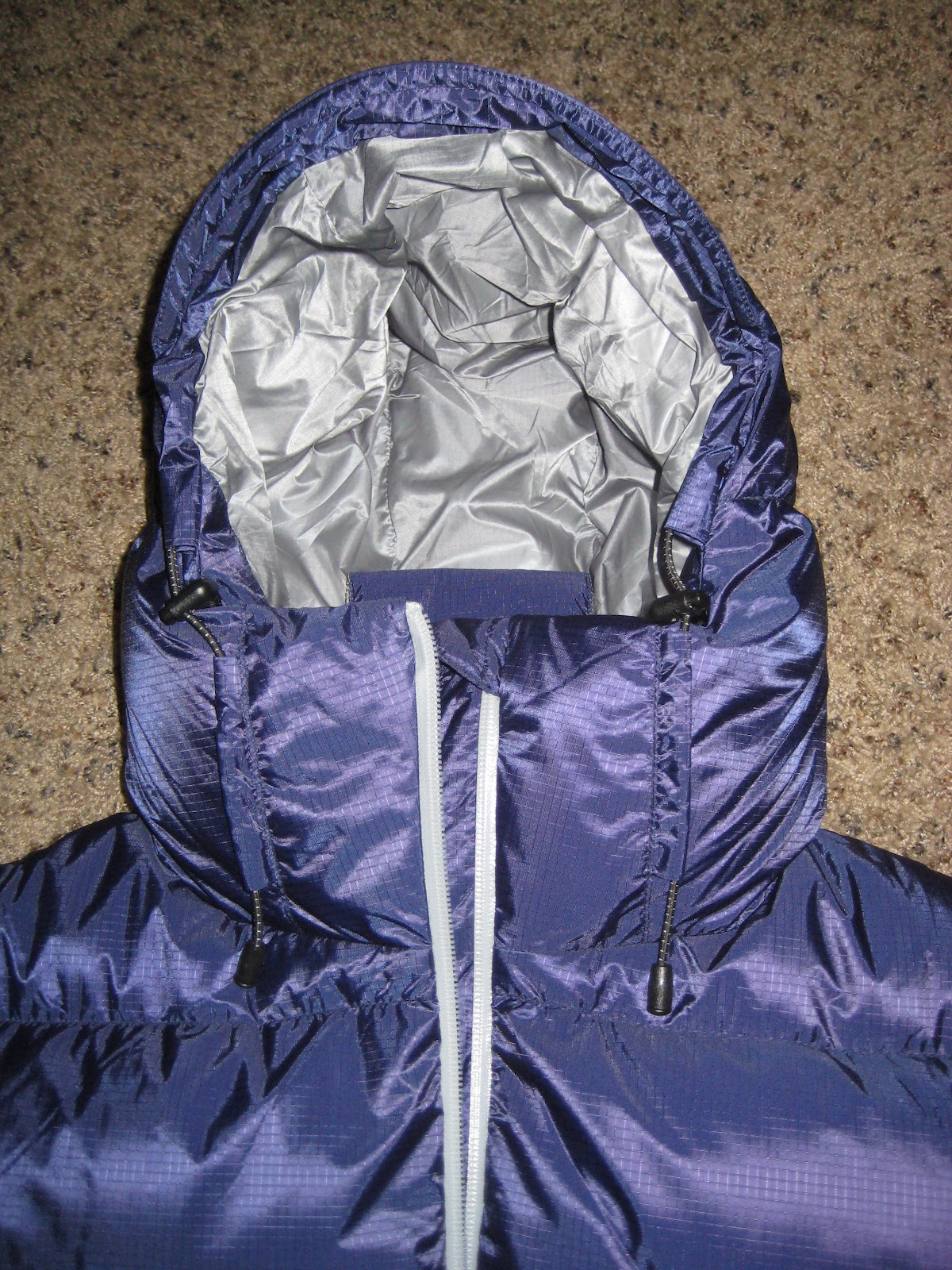
Finally, I really like the face fabric and liner material.  The liner is so soft and supple; it really feels good next to the skin.  The face fabric, though it sounds a little crinkley, it is very light and so far very weather resistant.  I haven't had it in really wet conditions other than about five minutes of rain, but the DWR worked very well and a few hours of blowing snow couldn't touch it.  If you're using the jacket for what it's designed to do (keep you warm in extra cold temps), you shouldn't have a problem with the fabric wetting out.  The shell fabric was surprisingly robust, as well.  I haven't climbed rock in it, but I have brushed it against granite faces and the face fabric didn't seem to mind.  But, just as a precaution, I try not to avoid touching rocks with it.

All in all, I'm starting to feel that this jacket is more worth the $500 price tag than when I first got it, but I still think the Neutrino Plus, though slightly heavier, is the better value all around.