Showing posts with label Alpine Climbing. Show all posts

Tuesday, April 30, 2013

Dorais Brothers' Slideshow - Tuesday, May 7 at 7pm

GEAR:30 and Outdoor Research are proud to present The Dorais Brothers' Slideshow, "Mountain Endurance: Red-lining in the Wasatch."

GEAR:30 came up with the title and flyer.  The humble guys that the Dorais Bros are, they thought the flyer sounded a bit exaggerated.  For those of us that follow their blogs, we understand that it's accurate.

Anyway, come join us!


Here's a link to their blogs:


My Thoughts on this year's Piolets d'Or 2013 Winners

This might be old news. . . it's an old post too that I just didn't get around to finishing and publishing.


Participation trophies were handed out at this year's Piolets d'Or, thereby making the award, well, much less valuable.

http://www.alpinist.com/doc/web13s/newswire-piolets-d-or-2013?utm_source=feedburner&utm_medium=feed&utm_campaign=Feed%3A+alpinist%2FEFcn+%28Alpinist+Newswires%29

Now, I have been a fan of the Piolets d'Or award for years.  I felt like it was a good way to recognize people who have accomplished incredible things in the mountains.  It has encouraged climbers to push their own limits and the limits of the sport.  It has encouraged climbers to expand their vision of what is possible.  It has now become a participation trophy.

I'm sure my opinion means little to most people, especially to those that are involved in choosing the Piolet d'Or winners, but that's the nice thing about blogs; if you don't want to hear it, don't read it.

In the article on Alpinist, it is stated that the Piolet d'Or has adopted a non-competitive, "everybody wins" approach to climbing, discouraging competition in the sport.  Marko Prezelj chose not to accept his Piolet d'Or a few years ago because he said something about not liking the rivalry that develops between climbing teams because they are all vying for the coveted award.  He said that it encourages drama and winners and losers are judged.

Well, I think it's great that Prezelj has his opinion and that he acted upon his convictions, but I strongly disagree.

If people feel like they've lost because somebody else won, that's a personal pride issue, not an award issue.  If somebody feels like an award is causing an unhealthy rivalry among climbing teams, that's a personal problem.  It's not the award causing those feelings, that is the climber's pride and ego getting in the way.  Pride says, "if you succeed, then I am a failure."  I have never once felt that way while climbing with others or hearing about others' successes in the mountains.

One of the greatest things about the climbing community that I belong to (and I thought it was this way everywhere) is that everybody wants everybody to succeed.  We all celebrate each others' successes.  There's never the feeling of failure when somebody else succeeds.

There is also competition among our community.  Recently we had a bouldering competition as part of the Ogden Climbing Festival.  Though each climber was hoping to win, all of the climbers were cheering each other on, wanting each other to climb their best.

Having an award like the Piolet d'Or is not about pointing out those that don't win; it's about celebrating those that have succeeded in pushing the sport the most.  There's no shame in climbing an incredible route, being nominated for a Piolet d'Or, and then not winning the ultimate prize.

But, when you start handing awards out to everybody, it devalues the award.  Even if everybody is worthy of winning the award, the award is not worth as much to the sport or those that are in the running.  The "everybody wins"/participation trophy approach is the quickest way to make the award irrelevant and encourage mediocrity or at least stop encouraging excellence.

Reward the excellence of the best climbs by nominating them for the Piolet d'Or, but then recognize the very best of these top climbs with the actual award.  It encourages future climbers to push their personal limits and the limits of the sport.

I hope that the participation trophy approach is a one-time thing and doesn't become the standard.  If so, I imagine somebody else with some other award will eventually step up to recognize the best climb, it will become the most sought after award, and people will start to forget about the Piolet d'Or.


Friday, June 15, 2012

Friends Shad Burnham and Brian Waters climb Cassin Ridge

A couple of friends of mine, Shad Burnham and Brian Waters, summited Denali last week via the Cassin Ridge.  I don't know all the details yet, but I have been told it took them four days due to high winds and stormy weather.  Shad's been a good climbing partner of mine for years.  This year he and Brian have been getting after it, climbing many fun and difficult routes in the Tetons over the winter, with the goal of getting up the Cassin Ridge on Denali.  Well done, guys!  Shad is the owner of the Pro Shop at The Front climbing gym.  If you're ever in Ogden, stop by and check out his shop and the gym.

Thursday, June 7, 2012

Great video of Steve House: "Shattered"

There's a great new video of Steve House called "Shattered."  Because I can't seem to figure out how to embed videos from vimeo (even though I swear I follow their instructions exactly), Dane at Cold Thistle has it on his blog.  Check it out.  It's only 5 minutes long.  Well worth your time, in my opinion.  Here's the link:

http://coldthistle.blogspot.com/2012/06/shattered.html

Wednesday, April 25, 2012

Feathered Friends Spoonbill. Not a review, just a heads up.

This is not a review.  I have not yet used this bag.  These are just observations.  Consider it me thinking out loud.


I was browsing some web sites this morning and came across the Feathered Friends Spoonbill two-person sleeping bag.  It was unveiled in 2007.  Not sure why I didn't notice it until now.  I have been toying with the idea of building a two person quilt for backpacking with my wife and for alpine climbing with a partner.  Though I don't enjoy sleeping in the same bag or quilt with another man, it is a lot more efficient to share body heat than to have two separate sleeping bags.

There was a line in the Spoonbill description that I found really intriguing:

"This bag has been tested extensively on Denali for the past five years and the feedback has been that it is plenty warm on that mountain for the athletes who were using it."

The bag weighs 2lb 11oz in a regular length.  That's the same weight as their Snowbunting 0 degree, 1-person sleeping bag, which is not warm enough for Denali for a single person, at least not without wearing other insulating layers as well.

The Spoonbill has approximately 5" of loft, about the same as FF's 20 degree sleeping bags.  But, then you add a heater sleeping next to you and the warmth and efficiency of the bag goes way up.  I've read a couple reviews of it being closer to a 10 degree bag and Feathered Friends says that their testers show it to be closer to a 0 degree bag.

I'm sure Feathered Friends' Denali claim totally depends on who the people are inside the bag.

Here are some stats:


  • Fill Weight: 23oz
  • Average Total Weight: 2lb 11oz
  • 850 or 900 fill power goose down
  • Width: 104" of girth at the shoulders, 90" at the hips, 68" at the feet
  • Two, fully-adjustable hoods (adjusting one hood shouldn't affect the other person)
  • Comes with either a NanoSphere shell or an Ultralight Pertex Endurance Shell
  • There is no down on the bottom; one must rely on their pads for warmth.  Compressed down on the bottom doesn't do much anyway.
  • $700-$850, depending on length and shell material.  Ouch!

Why I think this is a good idea

Let's consider the possibility that this bag is warm enough for Denali.  That means with two people it's warmth is comparable to a 0 degree bag, approximately.  A 0 degree bag from Feathered Friends will cost you about $550-$600 and will weigh about 2lb 11oz.  A comparable Western Mountaineering bag will cost about $580 and weigh around 2lb 11oz.  If you multiply this by two bags, then the weight is hovering between five and six pounds.  Just one Spoonbill weighs 2lb 11oz and is big enough for two people.  That's a weight savings of almost three pounds.  And for the unlucky person that gets to carry the bag, they're still only carrying the same weight as they would be with a 1-person 0 degree bag and would be saving a pound of weight, compared to carrying their own -20 bag.

Now let's consider that this bag is not warm enough for Denali by itself, but it is if you wear an insulated jacket and pants as part of your sleep system.  You may still sleep more comfortably because the bag is roomier than a normal sleeping bag.  I'm not sure about you, but when I sleep in my down jacket, I can't zip up my sleeping bag or it's simply too snug for comfort.  I struggle in a mummy bag without extra layers.  Having a two person bag, though still snug, I would guess would be more comfortable with those extra layers.

Finally, one of these bags is a lot cheaper than two of the others.  $750 for this bag is a lot better than about $1200 for two of the others.

The Potential Downsides

I can see a few potential downsides to this bag.  First of all, as a backpacking bag for use with my wife, I don't think it could get any better.  As an alpine climbing bag with a buddy, I'm not so sure.  Just the thought of cuddling with another guy all night is enough to make me consider carrying the extra 3 pounds we'd be saving.

Here is one of the funniest things I've read on the subject, by Kelly Cordes:

The other downside is that it may not be as versatile on a solo trip.  I guess you could unzip one side and fold the extra sleeping bag over like a burrito, but probably not as light or as efficient as a single person bag for a solo trip.

Either way, I'm still strongly considering this option for my wife and I and am debating its use as a 2-man  alpine climbing bag when going really light is necessary.

These pictures were taken from Feathered Friends' Facebook Page.  Hope they don't mind:

Notice there's no insulation on the bottom of the bag.  When you sleep on down, the down is compressed and loses its insulating value.  Therefore, it's pointless weight.  Sleeping pads are the key to insulating from the ground.


3-D Hoods


2lb 10.5oz according to this scale.

Friday, March 30, 2012

I'll be gone for a week

Phil and I have been planning a climbing trip for the last six months or so, and the time has finally arrived.     So, I'll be in the mountains until next Saturday and won't be able to post.  Hopefully we'll return with some good pictures.

See you next Saturday.

Monday, March 19, 2012

A Little About Myself

I just realized this morning that I have been writing this blog for almost two months, but most people still don't know much about me.  I'm not sure if this will give me more credibility or less, but I still think that it is important for people to understand a little about me before they decide whether or not to trust my opinions.  So here we go. . .

I am 25 years old and have been active in the outdoors my whole life.  I rock climb, ice climb, mountain bike, road bike, trail run, canyoneer, ski, snowshoe, etc.  I am most passionate about rock, ice, and alpine climbing, but I use all of the other activities as training.

I have been rock climbing for about 13 years, ice climbing for 5 years, and combining the two for a couple years.

I've been mountain biking for 15 years, many of which include competitive racing.  I have been road biking for about 7 years, most of which have included competitive racing.

 I started skiing when I was 10, which soon became an addiction.  I bought a season pass to Snowbasin every winter through junior high and high school and averaged between 50 and 70 days of skiing per year.  My desire to ski more technical terrain and find better snow led me to the backcountry, and the majority of my skiing in the last five years has been backcountry or side-country skiing.

I don't claim to be a runner, but I have done a decent amount of running over the last 10 years. I originally started running competitively in school, but that has evolved to mostly trail running.  I ran a 28-mile trail race last year and really enjoyed it and considered getting more involved in ultra-marathons, but I realized that I enjoy climbing, biking, and skiing more than running, so I mainly run to stay in shape for the other activities.

I have also been a gear addict since I was about 8 and would order catalogs from all the main outdoor companies and compare all their products.  I got a job at a local outdoor retail store at 16 and worked their for a total of 5 years, with a 2-year break in the middle.  I didn't make any money while I was there; most everything that I made went straight toward gear.  I have worked at the Weber State University Outdoor Program for 4 years as a trip leader/guide, and in their rental shop for about a year.

I have taught mountaineering and backpacking courses at Weber State for 3-4 years and have led (not guided) climbing trips to places like the Tetons and Mt. Rainier and have guided some outings around Ogden.

I married my beautiful wife last year.  She is an avid backpacker, hiker, and road biker.  Last year, her first year of road biking, she decided to ride in the LOTOJA with me, which is a 206-mile race from Logan, Utah to Jackson, Wyoming.  Being her first race, she wasn't expecting much, but ended up taking 1st place in her age group.

I have never been a world-class anything, but I've always been pretty active in just about everything. The hardest climbing I have done is V7 bouldering, 5.13- sport, 5.11 trad, WI5 ice (WI5 ice feels fairly easy, but I've never had the chance to lead harder), M7 mixed.  I have spent a decent amount of time climbing in the Tetons and Wind Rivers, but the majority of my climbing has been in Ogden and Salt Lake.

While looking for gear, I have always found it helpful to read other people's opinions on a particular product, the good and the bad.  I find it especially helpful when that person has similar interests as I do.  I also find it helpful to see lots of pictures, including pictures of the person wearing/using the products.  These are all things that I have tried and will continue to try to incorporate in this blog.

I hope this information will help you understand a little more about my background and the focus of this blog and help you decide whether or not this will be a helpful resource for you.

Thank you to everybody that has started to follow this blog!  It definitely helps me stay motivated to write and share when I know others are benefitting from it.  Please feel free to share your opinions with me and let me know if there is anything in particular you would like to hear about or gear you would like to have reviewed.  I'll do my best, as money and time allows, to address those things.

Thanks again,

Greg, Gear:30

Saturday, March 10, 2012

Marmot Zion (Neoshell) Jacket Review

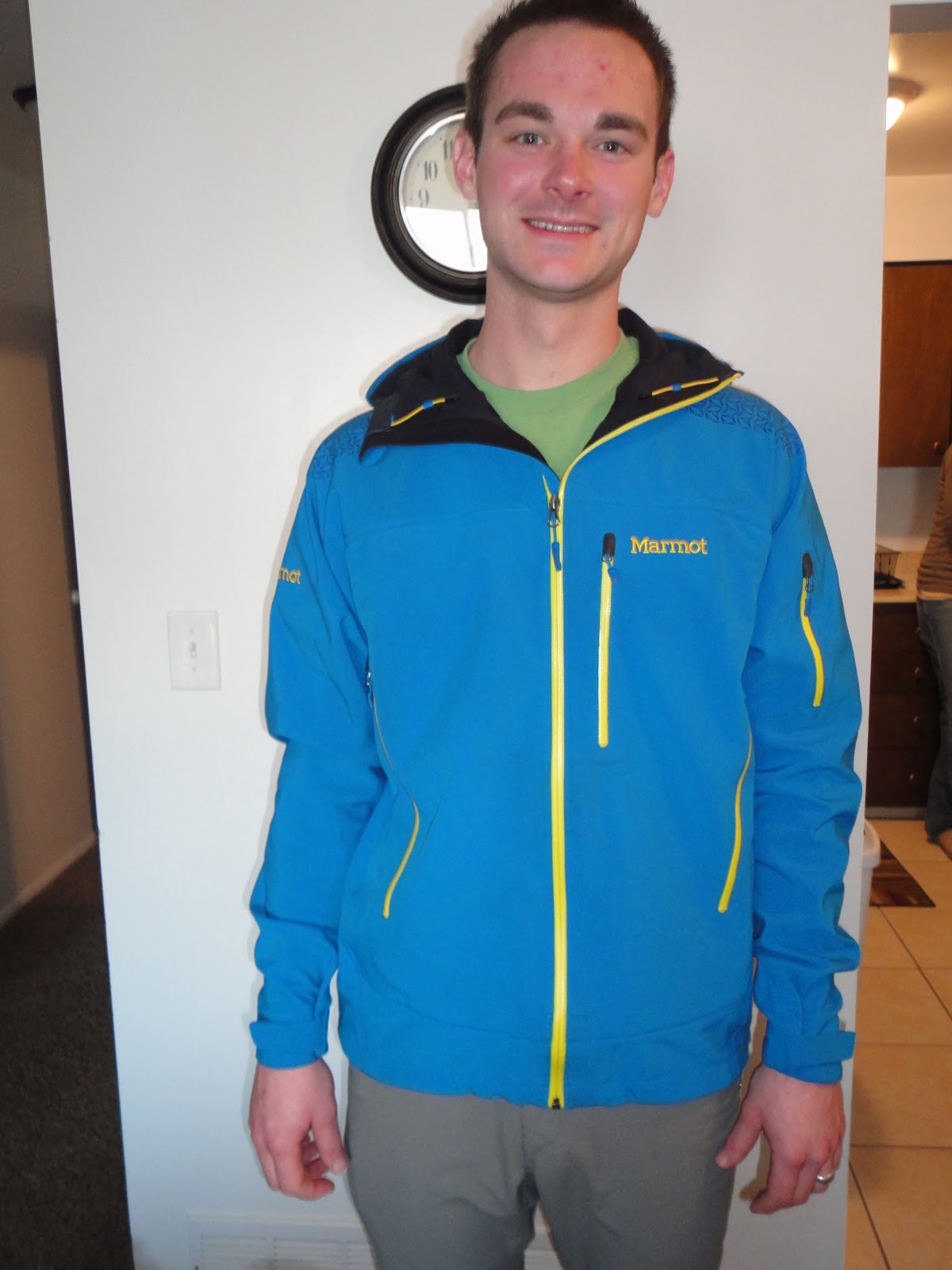
My friend, main climbing partner, and fellow gear addict Phil graciously agreed to write a review on his Marmot Zion Jacket.  I have eyed this jacket all winter with envy and was anxious to get an in-depth summary of his thoughts.  Here they are:


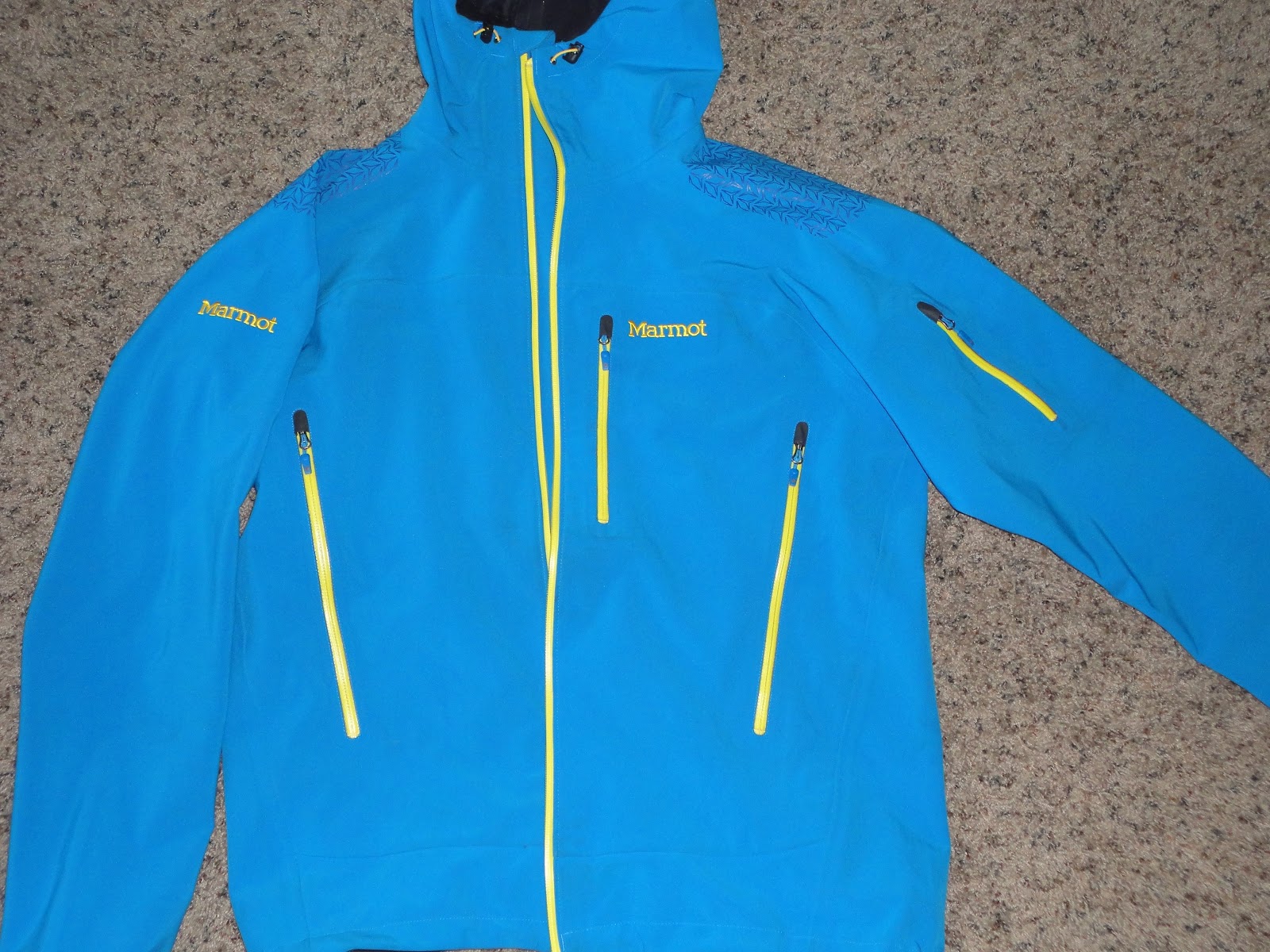
Marmot Zion Jacket
Phil ice climbing in his Marmot Zion Jacket


Size Large

Catalog weight:  18oz (probably a medium, maybe a small)

Scale weight: 28oz (large); Really, Marmot? Really?  10oz difference?  I guess maybe if they measured a small.


W.L. Gore and Associates patented their first WPB fabric circa 1976 and revolutionized the outdoor clothing industry. Many companies since then have worked to improve the waterproof-breathable category with some nominal improvements (mostly in the total weight of the membrane/treatment and the face fabric that they match it to), but you and I both know that waterproof AND breathable usually aren’t on speaking terms when you’re out huffing it up some canyon. Sure some fabrics will lose that clammy feeling within a few minutes or they may have some pit zips that alleviate the symptoms but unless temps are really low and/or you are not sweating, feeling clammy comes with adding a shell.

Well. . . that’s not exactly the case anymore. Polartec’s new Neoshell membrane has come a long way from our old and beloved Gore-tex partners.
Hiking uphill, 20 degree weather, comfortable in t-shirt and Zion Jacket


For disclosure purposes, I sweat. I sweat a lot! When hiking up to our usual ice cragging area with temps in the 20’s and only wearing a t-shirt, I drip sweat from my brow, my back, my legs, and usually have some beading up on my forearms. I know that is gross. I understand; my wife tells me about it occasionally. However, you need to know that in order to understand how great Neoshell is. This past winter I have used Marmot’s Zion Jacket (featuring neoshell) almost exclusively (I have dabbled in dry-Q elite). With the Zion Jacket I make that same approach wearing my usual silkweight long-sleeve tee, plus the Zion! The results? I still sweat a ton…. But now it gets moved outside the jacket like I’ve been promised it would by so many other fabrics for so long! I dump my pack to get racked up and I’m already dry. Literally.

But enough about the fabric (which is awesome), the jacket as a whole deserves some consideration.
6'3", 185lbs, Zion Jacket in size Large


Hood is a little tight across the mouth/lips with helmet on


I am 6’3” 185lbs. and I have the Zion in a large. The medium fit well, ridiculously well in fact, but had one drawback: on the official harness/jacket untuck meter it was a 9 (totally un-tucked from the harness within 2 ice moves and moving over my gearloops). So I compromised by going with the large that bellows out a little above a harness or hipbelt because of the additional volume (not too much of a compromise in my opinion). Dave Searle's un-tuck meter: http://coldthistle.blogspot.com/2011/12/my-2-pence-on-midlayers-by-dave-searle.html

Marmot paired the neoshell membrane with a super comfy liner fabric (think brushed suede or butter-jersey) and a burly shell fabric that will probably hurt the rock more than the rock will hurt it. It is a soft-shell format that most other companies aren’t doing with neoshell. At first I was a little disappointed with the heavy-handed construction, but have found solace in a few key facts:

First and foremost, the Zion has impressive insulative properties. Good enough in fact to help eliminate a mid layer piece in your layering system. This helps compensate for the heavier nature of this shell without sacrificing too much versatility (more layers can usually handle a broader temperature range) because of how breathable it is – it acts like your midlayer, with the benefit of being stormproof. For example, a normal layering system could be MHW’s wicked lite long tee (5.6oz), Patagucci’s R1 Hoody (12.8oz), and Arcteryx’s Alpha Lt (super sick and 12.9oz); total weight 31.3oz. A layering system with the Zion that will easily handle upper teens and low 20’s while climbing is as follows: MHW’s wicked lite long tee (5.6oz), and the Zion (28oz). That’s it. Simple, and with a total weight of 33.6oz. I figure for 2oz more I have a broader range of comfort without having to stop and remove or add layers. That's pretty sweet. The best part is, when the jacket is on, I really don't notice the extra weight; and this jacket rarely comes off.  If you are venturing into colder climes take the R1 and the Zion (40.8oz for an action suit that will take you to around 0˚ F).

Second, the face fabric has and will continue to stand up to my abuse. I have scuffed this jacket against Ogden quartzite and SLC granite without any sign of wear.

Lastly, the combination of fabrics is exceptionally stormproof and doesn’t make that awful hardshell noise. ‘Nuf said.

The Zion includes 5 pockets: 2 handwarmer pockets, 1 napoleon pocket, 1 sleeve pocket, and 1 internal pocket. All are fleece lined and very comfortable. The two handwarmers are spacious enough for keeping your lead gloves warm and dry and to stash your skins in, while the napoleon is big enough to hold a 12oz drink along with your lip balm and has a headphone portal. I have found that the sleeve pocket works great to hold GU packets or chomps and the internal pocket never gets used. The Velcro adjustment at the cuff works very well for the wrap-around tab configuration they used.  The hood is helmet compatible, and has two adjustments: the usual hood aperture pulls and a rear circumference pull cord help you batten down the hatches and take out volume.

Harness/Hipbelt-compatible pockets with water-resistant zips

One internal zip pocket and soft brushed lining


Now for everyone’s favorite part…the nitpicking!

The two handwarmer pockets that are purported to be hipbelt compatible have a problem I find happens a lot among climbing jackets. The upper portion of the pocket is visible and usable above a harness; still, the lower offending portion is cut off – effectively making the pocket opening smaller. Such is the case with the Zion’s pockets. Though to be fair, the zipper pull is at the top in the closed position so the pockets really are usable with a harness on.

 In my opinion, and for my head, the hood is a little low on volume. With the hood up over a helmet and fully zipped, my chin and lips abut the zipper area forcefully enough for me to usually keep the zipper slightly undone. If it were a perfect hood, it would fit over my helmet, fully zipped, with some room inside to make adjustments or at least offer some more stretch in the fabric.

The last thing is the fit. Like I said, the medium offered a much more trim fit which I usually look for, but the angel-wing technology failed a bit and it would come untucked. The large has extra volume in strange areas that l notice when I’m at home critiquing the jacket, but actually really don't notice when I’m out using it. However, the angel-wing mumbo-jumbo still fails compared to my standard - the Arcteryx Alpha. The Alpha's hem moves about 3" from arms down to arms up. In contrast the Zion moves at least 5". When pinned under a harness the stretch of the fabric helps in this area. In Marmot's defense (I really like their products), many of their other jackets that I own don't move nearly as much as the Zion.


At least 5" of lift in the hem when arms are raised.  I guess they forgot the angel-wing on this one.


All in all this is a very nice jacket. As with all pieces of gear, it could be improved upon. Anyone can take their favorite piece of kit and say, "if this small problem was fixed, this would be perfect." This jacket falls under that category. Yet, even the way it is made right now, it does what I want all gear to do: go unnoticed. I don’t ever have to think, “I’m starting to overheat I’d better fiddle with my pit zips/take off a layer,” or “this is way more wet than I expected, I wish I had brought my hardshell.” And that is well worth its few short comings.

Overall I would give the jacket 4 stars out of 5.  I love everything about this jacket except the minor hood issue and that I had to get a large to keep it tucked into my harness.  It easily establishes itself among the best winter ice and alpine climbing jackets available.

Monday, February 20, 2012

Alpine Climbing Kit for under 10 lbs total?

Most climbers have been following Ueli Steck ever since his speed ascent of the Grand Jorasses, the Ginat on Les Droites, and especially the North Face of the Eiger.  Last year he took his speed climbing in to the Himalaya, with ascents of Cho Oyu, Cholatse, an attempt at Everest, and a speed ascent of Shishapangma in 10.5 hours.


With the help of Ueli, Mountain Hardwear has designed an alpine climbing kit that's warm enough for the Himalaya (purportedly) but weighs under 10 pounds total.  This kit includes the clothing, sleeping bag, tent, and backpack for the Himalaya.  I'm not sure if every piece of the kit is being made available to the public (like his no-zipper sleeping bag), but most of it is.

See the video here: http://vimeo.com/25737054

Sorry, I tried to embed the video,but I can't seem to get it to work.

These pieces include:


Desna Hoody-12.3oz, powerstretch hardface, 1/2 zip, scuba-style hood, slightly water- and wind-resistant.  Note- I'm not sure they continued this for Fall/Winter 2012-13.  It's is no longer in their catalog.  The Desna in their catalog is full-zip, 3-pocket jacket version (17oz).


Warlow Pant- 14oz Minimal Softshell Pant, 2 hand pockets.


Quasar Pullover-9oz, Deep half zip, 1 internal stash pocket, Dry Q Elite.  This thing is sweet!, but pricy. $375  This piece made me giggle when I saw the weight and design.  I have been waiting for a good, lightweight, waterproof pullover.


Nilas Jacket-22oz, fully baffled jacket, 850 fill-power down, 15 denier AirShield Elite fabric (windproof, water-resistant), 2 handwarmer pockets, 2 internal stash pockets for waterbottles/gloves.  Also super sweet!  Overpriced? $500.


Nilas Bib-25oz, fully baffled, 850 fp down, AirShield Elite, etc. Powerstretch bib above waist, thermic micro synthetic insulation around calves for less bulk under/around boot, 2-way watertight front zip, 6-slider watertight rainbow zip in rear, reinforced instep. $475.  Ouch!  Nice though.


Mountain Speed 32 sleeping bag-15.5oz, 32 degree EN rating, 850 fp down, 7-denier fabric, 1/3 length zipper.  (not the bag in the video, but still super lightweight). $400 (reg), $440 (long)


Direkt 2 Tent-40oz (2lb 8oz), 2-person (close friends, family, or not shy), 25 ft^2, DAC featherlight nsl poles, etc.  $500.


Summitrocket 30 backpack-16oz, 30L (1830 in^3), removable compression and framesheet make pack 14oz, fabric is 100 denier ripstop nylon and HardWEar X-ply Dyneema. $150.

All of these pieces put together make for a total weight of 153.8oz or 9lb 9.8oz or 9lb 7.8oz with pack stripped down.  Either way, pretty impressive and expensive.  For this whole kit at retail you will be paying $2715, unless you need a long sleeping bag like I do, then $2755.

I checked this gear out pretty meticulously at the OR Show a month ago and the quality is top-notch.  I am particularly curious to try out the Quasar pullover and the Nilas Jacket.  I ordered a Nilas Jacket last week, but the Quasar was out of stock in my size.  Be watching for a review on the Nilas in a few month.

I have the Rab Neutrino down jacket which is about the same weight and length as the Nilas.  It, however, is sewn-through construction making it less warm than a baffled jacket.  I am curious to see if the Nilas in significantly warmer than the neutrino, or just significantly more expensive. 

Other Alternatives

There are less expensive options to almost all of these pieces, but they will add a little weight.
Instead of the Warlow pant ($150), the NWAlpine Fast/Light pant ($110). 
Instead of the Desna ($160), the NWA Black Spider Light Hoody ($90).  Not as warm as the Desna, but similar design.
Instead of Quasar Pullover, not sure.  Most other waterproof/breathable jackets are similarly priced but not as light as this jacket.  From what I or Phil have tested of Dry Q vs. Neoshell, Dry Q is lighter, Neoshell breathes better. 
Instead of the Nilas, the Rab Neutrino $325(or Neutrino plus for a baffled construction $400).  Probably not as warm as Nilas, but my guess is they're pretty close.  We'll see. . .
Instead of the Nilas Bib. . . beats me.  I'm not aware of a down pant that is less expensive, as light, or as well designed for high-altitude climbing as this one. Maybe the Arc'teryx Kappa Pant ($300, coreloft instead of down), but that will not be as warm as this bib.  Other 8000meter pants usually cost more than these bibs.
Instead of Direkt 2 ($500, 2lb 8oz), Black Diamond Hilight ($370, 2lb 10oz min. wt.) or Firstlight ($300, 2lb 13oz min wt.)  Similarly sized, not priced.  Direkt 2 has more stake/guy points.
Instead of Summitrocket 30 ($150, 16oz), Cilogear 30L Worksac ($150, 16oz stripped, 32oz with extras).  It may not be as light as the summitrocket, but it may be more versatile.

The Verdict

I'm psyched on what Mountain Hardwear is doing with their gear.  All of their new, Ueli-inspired products look top-notch and are as light or lighter than anything else out there.  The only issue I have is that they are expensive.  The pieces that I think are a little too expensive compared to what else is on the market is the Nilas Jacket and Direkt 2 tent.  I haven't tried either piece out yet, however, so when I do try them I could find that they are worth every cent.  If you have the money, I don't think you can go wrong with any of these pieces.  If your funds a limited, maybe look at some of the other less-expensive options. 


Wednesday, February 8, 2012

David Lama on the first free ascent of Compressor Route on Cerro Torre

An interesting interview with David Lama after his successful free ascent of the Compressor Route on Cerro Torre:
http://rockandice.com/news/1793-tnb-lama-disagrees-with-ct-bolt-chopping

Also, the story of this climb from Lama's own website:

http://www.david-lama.com/en/news.html?no_cache=1&tx_lamanews_pi2%5Bnewsuid%5D=268&tx_lamanews_pi1%5Bnewsuid%5D=268&tx_lamanews_pi1%5Bnewspage%5D=0

Lama has received a lot of flack from the climbing community over the last few years, but you have to admit, he is an incredibly talented climber.